
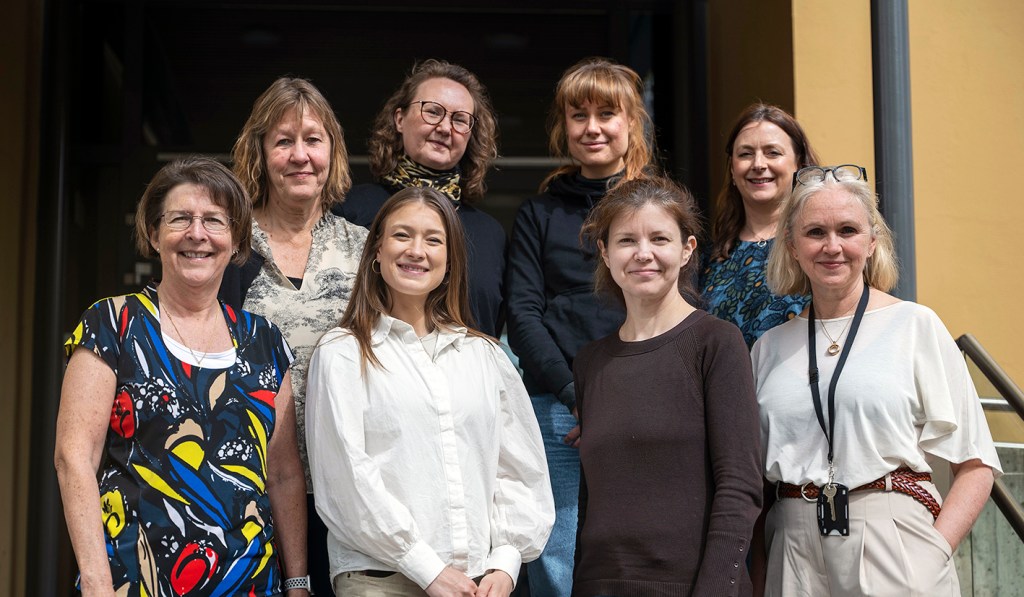
This spring, INTRAC members from Finland, Sweden, Northern Ireland, Germany, and Norway welcomed 24 master’s students from four European countries to an international course on aftercare.
The course was part of a Blended Intensive Program (BIP) worth 5 ECTS credits and funded by Erasmus. A key feature of BIPs is their combination of physical mobility with virtual learning, making them more accessible to students who may not be able to participate in longer-term exchange programs.
The virtual component included introductory lectures on the child welfare systems of each participating country, as well as a framework for a comparative study on care leaving. Students collaborated in cross-national groups to prepare presentations addressing various perspectives on care leaving across the countries that participated. The themes included outcomes, legislation, service organization, welfare systems, and user participation.
The in-person segment took place during the first week of May at VID Specialized University in Oslo, Norway. The word “intense” correctly describes the week, as students were engaged in activities from early morning until late at night. They attended lectures covering a wide range of topics including family, homelessness, user participation, welfare institutions, disability, life-course perspectives, anti-oppressive practices, and digital social work. The program also included field visits to child welfare services and user organizations, as well as sightseeing and social events in the evenings.
The course was a great success. The students especially highlighted the valuable insights into how care leaving is approached differently across countries, in terms of legislation, organization, and which young people are defined as care leavers. It also created an important opportunity for leading scholars in the field of care leaving to connect and deepen their understanding of care leaving from an international and comparative perspective. One notable outcome of the week is the participating universities’ commitment to running the course again in 2026.
Although not officially an INTRAC course, this initiative would not have been possible without the INTRAC network and the professional connections we have developed as teaching researchers. We hope this course serves as an inspiration for others to explore similar forms of international collaboration.
Inger Oterholm and Ingri-Hanne Brænne Bennwik
Hosts of the 2025 BIP
 INTRAC